Posts

Optimizing Operations for Best Performance and Productivity

Whether you work in the oil or gas industry, your main aims are to overcome the challenges that are leading to lower performance and maximize your profits. A top way to improve productivity and returns is to use modern technology. For this to be effective, however, you need to find products that provide you with reliability and require the least amount of effort required on your part. Meeting Challenges For most companies, the greatest challenges are staying profitable in the face of changes in the economic climate and coping with changing well conditions — conventional to mature. Another challenge is to improve efficiency in the oilfield. This can be difficult if you are using outdated technologies or if your artificial lift products are being misused. What to Look For in Products You need to improve productivity (such as through enhanced pumping capabilities) at the same time as reducing energy use, operating costs, wear, and corrosion. Furthermore, you want to min...
What Are Horizontal Pumping Systems?

Horizontal pumping systems come in a variety of different designs for a number of different applications. For example, they are used in industries like refineries, mills, and foundries as well as in domestic appliances. In fact, horizontal pumps are probably the most common type of pumping systems. Uses of Horizontal Pumping Systems In homes and businesses, horizontal pumps are found in washing machines, HVAC systems (such as to control condensation collection), and other appliances. They are also beneficial for municipalities for sewage and water treatment. However, it is industry where horizontal pumps have their greatest number of uses. For instance, they are used for: -            Steam systems to return cooled water to a boiler (i.e. as a boiler feed pump) -            Flood control in water flood sites -          ...

Sucker Rod and Carbon Fibre Rod at a Glance

When it comes to sucker rods, you have two main options: a conventional sucker rod or a carbon fibre rod. By understanding what each is and what it is used for, you can make an informed decision about which would be better-suited for your situation. Conventional Sucker Rod A conventional sucker rod is a steel rod measuring between 7 and 9 metres. Sucker rods come in an array of sizes, making them suitable for various RRP and PCP applications. Sucker rods are usually used in conjunction with sucker rod guides. These are made from plastics with high-performance additives to increase strength, reliability, and production performance. Guides decrease contact of the metal of the sucker rod with the metal of the tubing, therefore increasing the lifespan of the tubing. Rod guides come in a few different forms, allowing you to choose the right option for you according to application and whether you need paraffin removal or protection against wear. Options include: -   ...

How to Increase Production and Decrease Costs with Artificial Lifts

Artificial lifts, systems and operations are designed to save money. They do this by increasing production and decreasing costs. However, there’s a science to ensuring your system achieves the proper results. This includes taking several factors into account, including how to maximise production in a mature field. And artificial lifts are one of the best ways to address production requirements. Below is an explanation of how this can be accomplished. Artificial Lift Systems and Types Whether a lift system optimises production, depends on the type of lift and system used. The lift chosen will depend on the field scale and on the well’s parameters. On the other hand, the lift system or method chosen will depend on production needs. Production needs are determined by assessing the current field productivity, drilling, completions and reservoir. There are two main lift systems: gas-assisted and pump-assisted. Additionally, there are eight artificial lift types. These types include...

Different Applications for Artificial Lift

An artificial lift is used to lower the bottom hole pressure (BHP) and raise production in a liquid well. Positive-displacement pumps, like progressive cavity pumps (PCP) or beam (sucker-rod) pumps are used to enhance production by lowering intake pressure. However, centrifugal pumps can perform this same job, expect with an electrical submersible pump (ESP) system. Other artificial lifts include: jet hydraulic and reciprocating pumps and plunger lifts. Many oil wells and gas wells will need an artificial lift to increase liquid production, but these lifts have many more applications. Below is a few examples of artificial lift applications.  Deep Water Oil Pumping Deep water oil pumping would only be mildly successful without an artificial lift or subsea lift system. Lifts and flow boosting systems can be a major part of deep water oil production and essential for making an oil drilling project commercially viable. There are two artificial lifts that are perfect for this job...

Mitigating Sucker Rod Corrosion

Image
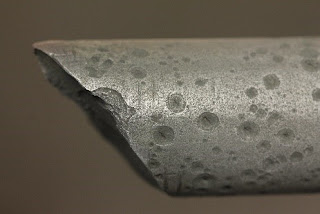
Corrosion is a problem that is becoming increasingly more common in oil and gas as existing wells age and as producers push into deeper and hotter wells with more aggressive fluids. In the artificial lift industry, corrosion has been around for many years and with significant time and costs associated with corrosion mitigation and, where that is not effective, corrosion related failures. Each year, billions of dollars are spent controlling and working over corrosion-plagued wells. Therefore, producers must be savvy and build a corrosion control plan into their life-of-the-well strategy to mitigate problems and maintain production. Corrosion Overview Corrosion is defined as “the deterioration of a substance (usually metal) or its properties because of a reaction to its environment.” This means that a typical piece of downhole equipment like a carbon steel sucker rod is a magnet for corrosion in the presence of water and chemical compounds like H2S, CO2, and O2.[1] Examples of...

Why Progressive Cavity Pumps Are Well-Suited for the Oil and Gas Industry

The oil and gas industry has suffered from many problems in recent years. One solution that can help companies get back on their feet is to use progressive cavity pumps. Despite not being widely talked about, these have multiple applications, including for drilling mud transfer, fracking, polymer dosing, and produced water treatment. 1. Self-Priming and Suction Lift :- Progressive cavity pumps feature top-performing self-priming and suction-lift capabilities. They can lift up to 9 metres, making them perfect for all types of artificial lift. As there is no gas locking, they are even suited for gaseous liquids. 2. Avoid Creation of Emulsions :- Through gentle low-shear pumping action, this type of pump has proven to be the best option for oil and water separation. They allow you to transport oil and water mixtures with minimal damage to oil droplet size, avoiding the creation of emulsions that are difficult to separate. 3 . Low NPSH Requirements :- Progressive cavity pumps can ha...